
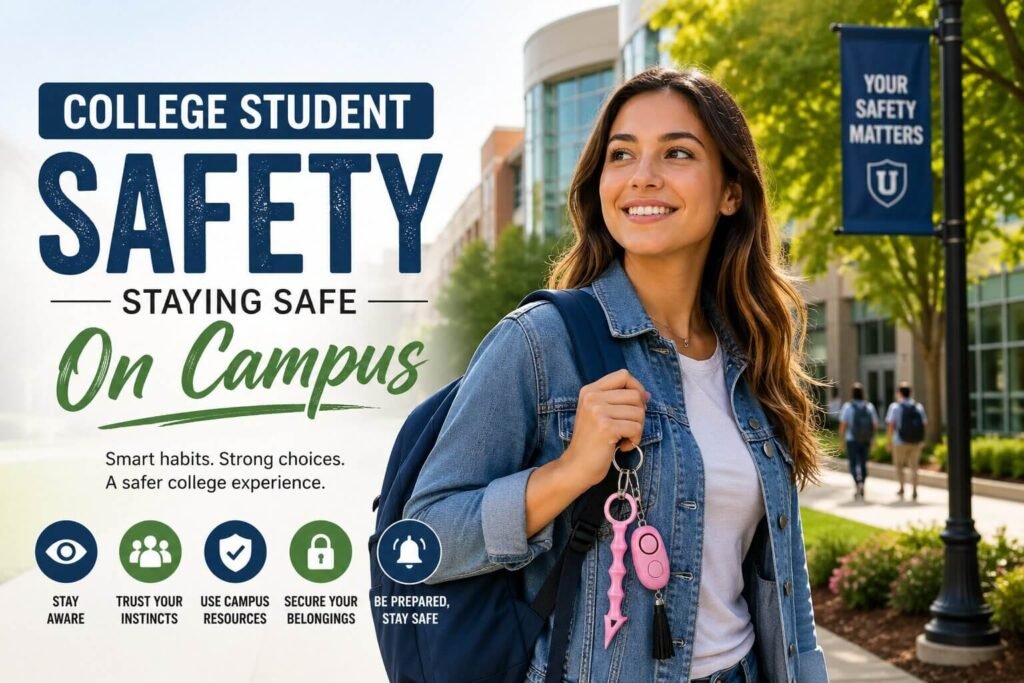
College life is one of the most exciting times in a young adult’s life. It’s filled with new friendships, academic opportunities, and personal freedom. But with that independence comes the responsibility of staying safe. Whether students are walking to late-night classes, living in dorms, or exploring off-campus life, campus safety should always be a priority.
Understanding the risks and learning practical safety habits can make a major difference in preventing dangerous situations. From staying aware of surroundings to carrying practical personal safety tools like self-defense keychains, college students can take simple steps to protect themselves while enjoying campus life.
In this guide, we’ll cover essential college student safety tips that help students stay safe on campus, in dorms, and while traveling around school grounds.
Why College Student Safety Matters
College campuses are often viewed as safe environments, but they are not free from crime. Theft, harassment, assault, and other emergencies can happen on or near campus. Students are often navigating unfamiliar surroundings, late-night schedules, and social situations that may increase their vulnerability.
Many college students are living away from home for the first time, which means they must make safety decisions independently. Learning basic safety precautions can reduce risks and build confidence.
Being proactive about personal safety doesn’t mean living in fear—it means being prepared and aware.
Stay Aware of Your Surroundings
One of the simplest and most effective safety habits is staying alert. Distractions like texting, wearing headphones, or looking down at your phone can reduce awareness of what’s happening around you.
Practice Situational Awareness
When walking across campus:
- Keep your head up
- Avoid staring at your phone
- Limit headphone use
- Notice who is around you
- Stay in well-lit areas
Being aware of your environment helps you identify potential risks early and avoid unsafe situations.
Faites confiance à votre instinct
If something feels off, trust your gut. Whether it’s an unfamiliar person acting suspiciously or an area that feels unsafe, it’s better to leave and seek help than ignore warning signs.
Listening to your instincts is one of the most powerful self-protection skills students can develop.
Use Campus Security Resources
Most colleges offer safety resources, but many students don’t fully use them. Familiarizing yourself with campus security services can provide quick support when needed.
Know the Emergency Contacts
Save important numbers in your phone:
- Campus security
- Dorm front desk
- Local police
- Resident advisor
- Trusted friends or roommates
Knowing who to contact in an emergency can save valuable time.
Use Escort Services
Many campuses offer security escorts at night. If you need to walk across campus after dark, request an escort rather than walking alone.
These services are designed to help students feel safe, especially when traveling late at night.
Stay Safe in Campus Housing
Dorms and campus apartments can feel secure, but students still need to practice smart habits to prevent theft and protect personal safety.
Lock Doors and Windows
Always lock your dorm room, even if you’re stepping out briefly. Many thefts happen because students leave doors unlocked.
Remember to:
- Lock doors when leaving
- Secure windows
- Never prop doors open
- Keep valuables hidden
These simple steps help protect your belongings and reduce unauthorized access.
Be Careful Who You Let In
Do not let strangers into dorm buildings, even if they say they live there. “Tailgating” happens when someone follows a student inside without proper access.
Only allow entry to people you know or verified guests.
Travel Safely Around Campus
Getting around campus safely is especially important at night or when traveling alone.
Walk With Friends
Whenever possible, walk with classmates or friends—especially after dark. There is safety in numbers, and groups are less likely to be targeted.
If no one is available to walk with you, call someone while walking or use campus escort services.
Plan Safe Routes
Choose routes that are:
- Well lit
- Frequently traveled
- Close to campus buildings
- Covered by security cameras
Avoid shortcuts through isolated areas, even if they save time.
Be Smart at Social Events
Parties and social gatherings are common in college life, but they can also create safety risks if students are not careful.
Stay With Trusted Friends
Attend parties with friends you trust and agree to leave together. Watch out for one another throughout the night.
Never leave a friend alone in an unfamiliar or unsafe situation.
Protect Your Drink
Never leave drinks unattended. If you lose sight of your drink, get a new one.
Drink safety is essential in preventing dangerous situations at parties or bars.
Know Your Limits
Being aware of alcohol consumption helps maintain clear judgment and reduces vulnerability.
Responsible choices help students stay in control and avoid risky situations.
Carry Personal Safety Tools
Personal safety tools can help students feel more secure when moving around campus. Small tools that fit on a keychain are especially practical because they are easy to carry every day.
Popular options include:
- Alarmes personnelles
- Safety whistles
- Flashlights
- Self-defense keychains
These tools can provide an extra layer of confidence while walking across campus or commuting.
Stylish and compact self-defense keychains are especially useful for college students who want practical safety tools that are easy to access.
Protect Your Digital Safety
Campus safety is not just physical—students also need to protect themselves online.
Use Strong Passwords
Create strong passwords for:
- School accounts
- Courriel
- Banking apps
- Social media
Avoid using easy passwords like birthdays or school names.
Protect Personal Information
Be cautious about sharing:
- Dorm location
- Class schedules
- Personal phone number
- Real-time location on social media
Limiting public information reduces the chance of being targeted.
Learn Basic Self-Defense Skills
Knowing how to react in an emergency can improve confidence and preparedness.
Students can benefit from learning:
- How to break free from grabs
- How to create distance
- How to call for help effectively
- How to defend themselves if necessary
Many campuses offer self-defense classes through campus security or student programs.
Combining basic self-defense skills with tools like self-defense keychains can help students feel more empowered.
Build Safe Daily Habits
Safety often comes down to everyday routines. Small habits can make a big difference over time.
Helpful habits include:
- Letting friends know where you are
- Charging your phone before leaving
- Keeping emergency contacts ready
- Avoiding isolated areas
- Carrying safety tools
When practiced consistently, these habits become second nature.
Final Thoughts on College Student Safety
College is a time for learning, independence, and personal growth, but staying safe on campus should always be part of the plan. By staying alert, using campus resources, traveling wisely, protecting personal information, and carrying practical safety tools, students can reduce risks and feel more confident in their daily routines.
Safety isn’t about being afraid—it’s about being prepared. Simple precautions like walking with friends, locking dorm doors, and carrying self-defense keychains can make a meaningful difference.
With smart habits and the right tools, college students can enjoy campus life while protecting themselves every step of the way.
Products by Category
-
Kit porte-clés d'autodéfense Plaque de combat mécanique
Le prix original était : $26.65.$19.98Le prix actuel est : $19.98. -
Kit d'autodéfense pétillant de 14 pièces
$87.98 -
Kit porte-clés Kubaton et cœur en strass étincelant
Le prix original était : $35.96.$26.97Le prix actuel est : $26.97. -
Porte-clés chat d'autoprotection en strass étincelant
Le prix original était : $23.81.$17.86Le prix actuel est : $17.86.




 French
  English
  Spanish
  German