
Car accidents remain one of the leading causes of injury and death worldwide. While we can’t always prevent collisions, understanding personal safety during car accidents can dramatically reduce your risk of serious injury and improve your chances of survival. This comprehensive guide will equip you with essential knowledge and practical strategies to protect yourself and your loved ones when the unexpected happens.
Understanding the Physics of Car Accidents
Before diving into safety measures, it’s crucial to understand what happens during a collision. When your vehicle impacts another object, several forces come into play simultaneously. The vehicle experiences rapid deceleration, while your body continues moving forward at the original speed until something stops it—ideally your seatbelt and airbag, rather than the dashboard or windshield.
Modern vehicles are designed with “crumple zones” that absorb impact energy, but understanding these dynamics helps explain why certain safety measures are so critical. The difference between minor injuries and life-threatening trauma often comes down to preparation, proper safety equipment usage, and knowing how to respond in those critical moments.
Pre-Collision Safety Measures: Your First Line of Defense
Proper Seating Position: The Foundation of Safety
Your seating position dramatically affects your safety during an accident. Sit at least 10 inches away from the steering wheel to allow airbags to deploy properly. Adjust your seat so you can reach the pedals comfortably while maintaining a slight bend in your knees. Your hands should rest at the 9 and 3 o’clock positions on the steering wheel, not the traditional 10 and 2, to avoid airbag-related injuries.
Ensure all headrests are properly positioned— the top should align with the top of your head and be as close to the back of your head as possible. This prevents whiplash injuries during rear-end collisions.
Essential Safety Equipment Checks
Regular maintenance of safety systems is non-negotiable. Check your airbag indicator light during startup—if it stays illuminated, have the system inspected immediately. Ensure seatbelts retract properly and latch securely. Replace any frayed or damaged belts immediately.
Keep an emergency kit in your vehicle including: first aid supplies, reflective triangles or flares, flashlight with extra batteries, emergency blanket, window breaker and seatbelt cutter tool, and emergency contact information. These items can be life-saving in the aftermath of an accident. Consider a luxurious rhinestone window breaker keychain that combines style with essential safety functionality—this elegant accessory ensures you’re always prepared for emergencies while complementing your personal style.
Mental Preparation: The Often-Overlooked Safety Measure
Mental rehearsal can significantly improve your response during an accident. Visualize different scenarios and your planned responses. Know where your hazard lights are located. Practice finding your phone’s emergency call feature without looking. This mental preparation can reduce panic and improve decision-making when every second counts.
During the Collision: Critical Moments That Save Lives
The Split-Second Decisions That Matter
When you realize a collision is imminent, you have mere milliseconds to act. If possible, aim for a glancing blow rather than a head-on impact. Your vehicle’s front and rear are designed to absorb impact better than the sides. Avoid braking so hard that your wheels lock—maintain steering control if at all possible.
Critical Don’ts During Impact:
- Don’t duck or cover your head—this positions you incorrectly for airbag deployment
- Don’t brace against the steering wheel—keep your arms slightly bent
- Don’t lean forward—maintain proper seating position
- Don’t grip the steering wheel too tightly—you could sustain hand or wrist injuries
Understanding Airbag Deployment
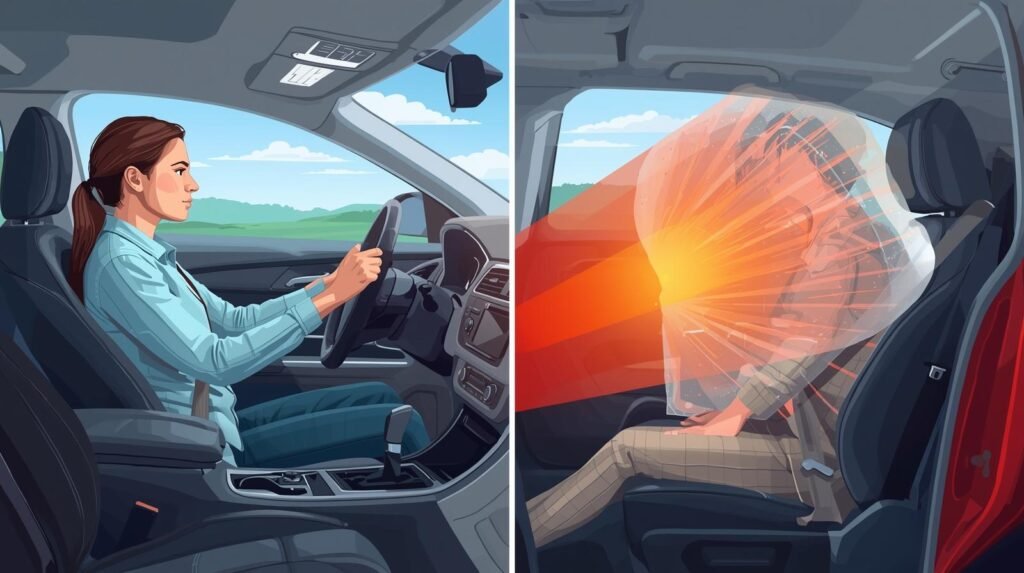
Airbags deploy at speeds up to 200 miles per hour within 20-30 milliseconds of impact. While they save lives, they can cause injuries if you’re positioned incorrectly. The force is designed for properly seated occupants wearing seatbelts. Sitting too close, leaning forward, or placing feet on the dashboard can result in serious airbag-related injuries.
Modern vehicles often have multiple airbags—front, side, curtain, and knee airbags. Each deploys based on specific impact patterns. Understanding that airbags are single-use safety devices emphasizes the importance of immediate post-accident evaluation, as they cannot protect you in secondary impacts.
Post-Collision Safety: Protecting Yourself After the Impact

Immediate Assessment and Response
Once the vehicle comes to rest, take these immediate steps:
- Check yourself for injuries before moving. Look for bleeding, pain, or difficulty breathing
- Check on passengers if you’re able to move safely
- Turn on hazard lights immediately if the system is still functional
- Assess the environment for additional dangers—fire, fuel leaks, traffic hazards
- Call emergency services even if injuries seem minor
Decision Points: Stay or Exit?
Your decision to remain in the vehicle or exit depends on several factors. Generally, remain in your vehicle with seatbelts fastened if:
- You’re on a busy highway or in heavy traffic
- The vehicle is stable and not at risk of fire
- You’re injured and movement could worsen injuries
Exit immediately if:
- You smell fuel or see fire
- The vehicle is unstable or in danger of being struck again
- You need to provide assistance to others
If you must exit, do so carefully, watching for traffic, broken glass, and other hazards. Move to a safe location away from the roadway if possible. If your vehicle’s electrical system is damaged and doors won’t open, use your llavero rompeventanas to escape through a side window—keeping this essential tool on your keychain ensures you’re never trapped in an emergency situation.
Managing Secondary Accidents
One often-overlooked danger is the risk of secondary accidents. If your vehicle is disabled in a dangerous location, take immediate action to prevent further collisions. Place reflective triangles or flares at appropriate distances (10, 100, and 200 feet behind your vehicle) to warn approaching traffic. In low-visibility conditions, consider using your phone’s flashlight or vehicle dome lights to increase visibility.
Modern Safety Technologies: Your Digital Co-Pilot
Today’s vehicles come equipped with sophisticated safety systems that work to protect you even before you realize danger exists. Understanding these technologies helps you maximize their effectiveness:
Automatic Emergency Braking (AEB)
AEB systems can prevent or mitigate collisions by automatically applying brakes when they detect an imminent impact. These systems are particularly effective in rear-end collision scenarios and can reduce accidents by up to 50%.
Electronic Stability Control (ESC)
ESC helps maintain control during emergency maneuvers by automatically applying brakes to individual wheels. This technology is especially valuable in adverse weather conditions or during sudden lane changes.
Advanced Driver Assistance Systems (ADAS)
Lane departure warnings, blind-spot monitoring, and adaptive cruise control all contribute to preventing accidents. However, these systems require proper calibration and maintenance to function correctly.
Common Injuries and Immediate Response
Understanding potential injuries helps you respond appropriately:
Whiplash and Neck Injuries
Symptoms may not appear immediately. If you experience neck pain, stiffness, or headaches, seek medical attention promptly. Early intervention can prevent chronic issues.
Head Injuries
Even minor head trauma requires evaluation. Concussion symptoms can develop hours or days after the accident. Watch for confusion, nausea, dizziness, or unusual sleep patterns.
Internal Injuries
These are particularly dangerous because they’re not immediately visible. Chest pain, difficulty breathing, or abdominal pain require immediate medical evaluation.
Legal and Insurance Considerations
While personal safety is paramount, understanding the legal aspects protects your interests:
Documentation Best Practices
- Photograph all vehicle damage, road conditions, and visible injuries
- Note weather conditions and time of day
- Collect contact information from witnesses
- Record the exact location and circumstances
Communication Guidelines
- Stick to facts when speaking with authorities
- Avoid admitting fault or making accusations
- Seek medical evaluation even if you feel fine
- Contact your insurance company promptly
Special Considerations for Different Demographics
Protecting Children
Child safety seats must be age and size-appropriate. Replace any car seat involved in a moderate to severe accident. Ensure proper installation—many fire stations offer free safety checks.
Elderly Drivers
Age-related changes in reflexes and vision may require additional safety measures. Consider vehicles with advanced safety features and ensure regular vision and health checkups.
Pregnant Women
Special positioning is required to protect both mother and baby. The lap belt should sit under the belly, across the hips, and the shoulder belt between breasts and to the side of the belly.
Recovery and Long-Term Safety
The days and weeks following an accident are crucial for both physical and mental recovery. Post-traumatic stress is common and normal. Consider professional counseling if you experience anxiety, sleep disturbances, or fear of driving.
Monitor your physical health closely. Some injuries, particularly soft tissue damage, may not manifest immediately. Maintain detailed records of all medical treatment for insurance and legal purposes.
Building Your Personal Safety Strategy
Creating a comprehensive personal safety strategy involves:
- Regular vehicle maintenance including safety system checks
- Emergency kit updates and seasonal adjustments
- Insurance policy reviews to ensure adequate coverage
- Medical information updates including emergency contacts and allergies
- Practice scenarios with family members to ensure coordinated responses
Conclusion: Empowerment Through Preparation
While car accidents remain an unfortunate reality of modern life, personal safety during these events is largely within your control. Through proper preparation, understanding of safety systems, and knowledge of appropriate responses, you can significantly reduce your risk of serious injury.
Remember that safety is not just about reacting to accidents—it’s about creating habits and environments that minimize risk while maximizing your ability to respond effectively when emergencies occur. Every safety measure you implement, from proper seatbelt use to keeping a llavero rompeventanas easily accessible, contributes to your overall protection.
The information in this guide represents your first step toward enhanced personal safety during car accidents. Continue to stay informed about evolving safety technologies, maintain your vehicle properly, and share this knowledge with loved ones. After all, the best accident is the one that never happens, but when they do occur, being prepared can make the difference between a frightening experience and a life-altering tragedy.
Stay safe, stay prepared, and remember—your safety is worth the investment of time and attention to these critical details. Every journey begins with a single step, and every safe arrival begins with proper preparation and awareness.
 Spanish
  English
  German
  French